
FREQUENTLY ASKED QUESTIONS
The difference between distilled water and reverse osmosis demineralized water
Sep
A complete but to-the-point article about distilled water and reverse osmosis demineralized water.
In this article, you will learn:
- What is distilled water and how is it obtained?;
- What is reverse osmosis demineralized water?;
- Which of the two types of water has better quality?;
- Possible applications for each of the two types of water.
What is distilled water and how is it obtained
Distilled water is a type of water that has been purified by boiling and then condensing the steam into a new container. This process, called distillation, removes most of the impurities and minerals present in tap water or natural water sources.
What is reverse osmosis demineralized water
Water demineralized through the reverse osmosis process is a type of water that passes through a semipermeable membrane under pressure. Without pressure, this process is impossible. The pores of the reverse osmosis membrane are approximately 0.0001 microns in size, which is why pressure is necessary. This water is demineralized, and most contaminants are flushed into the sewer along with a certain amount of water called concentrate. The filtration percentage depends on the type of contaminant and can range from 50% to 99.99991%.
Which of the two types of water has better quality? Distilled or demineralized?
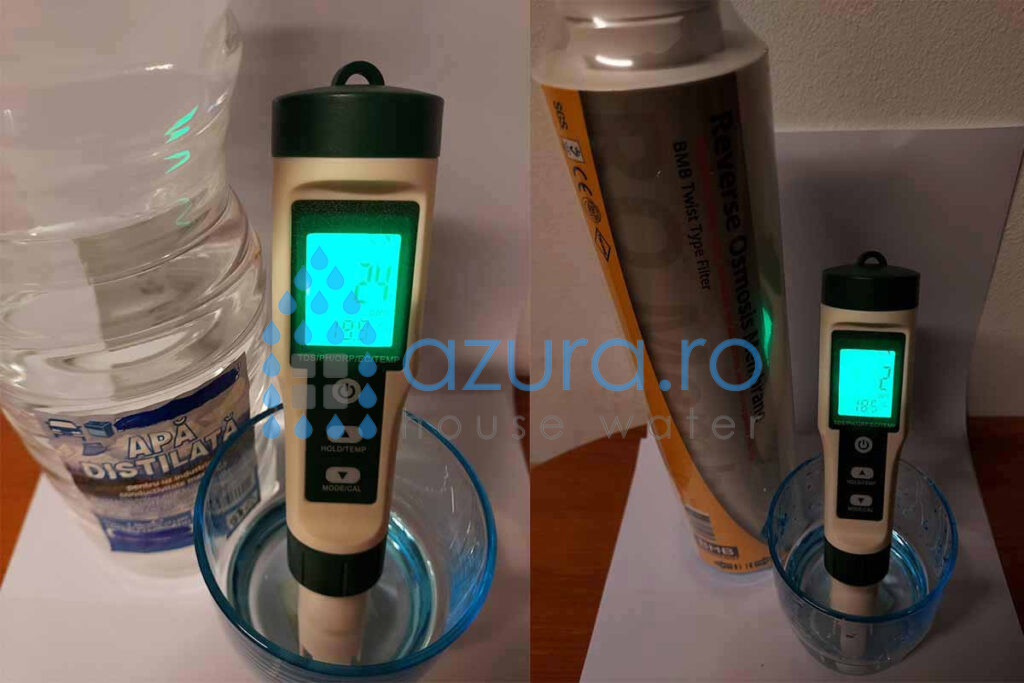
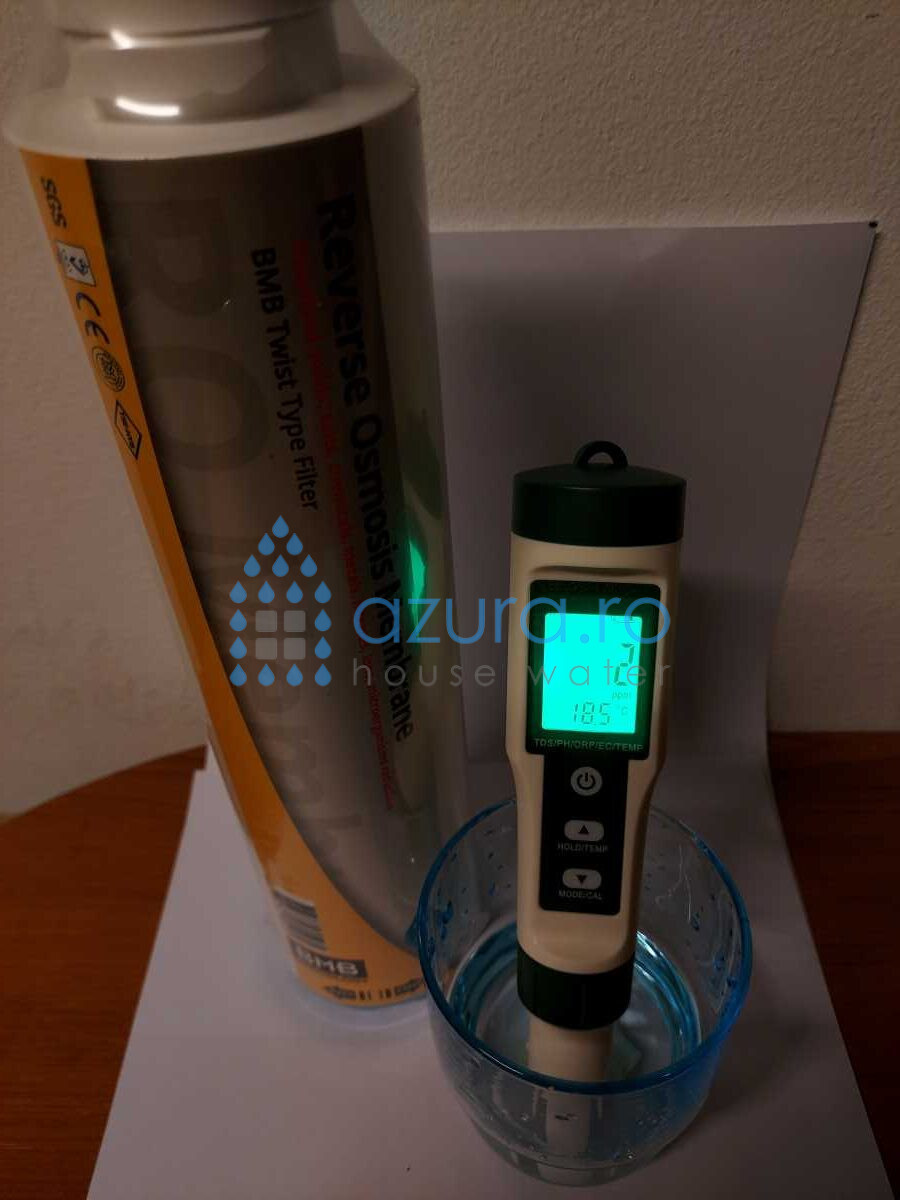
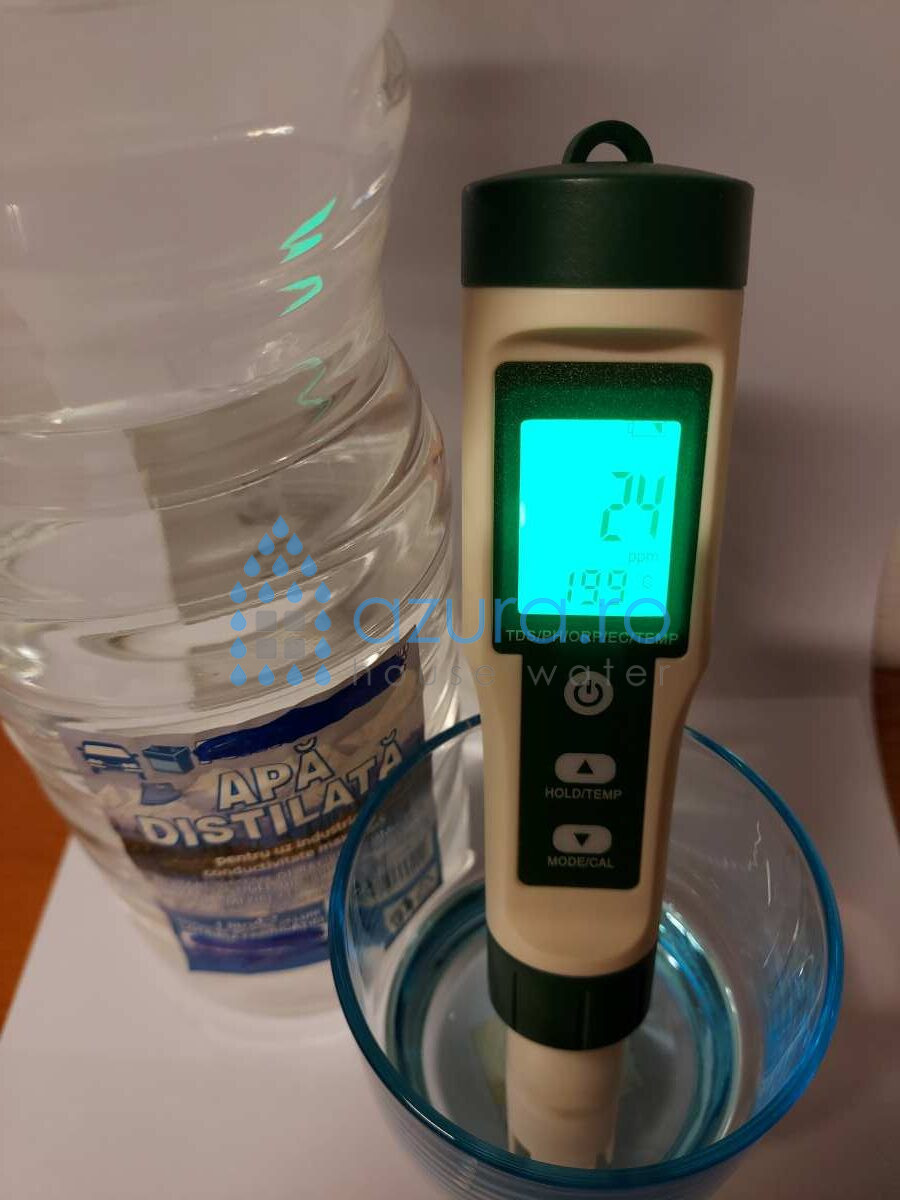
Theoretically, distilled water has the highest purity. But this is not always the case. In the tests conducted by us with a TDS meter, for this article and to highlight the difference between the two types of water, I found that distilled water purchased from stores had a higher charge than demineralized water from a home reverse osmosis system. It was an interesting and unpleasant finding because distilled water normally has higher purity, and I wanted to demonstrate this with images. But it wasn't possible. So in the pictures highlighted in this article, the demineralized water with reverse osmosis has a higher purity than the distilled water purchased from stores. However, normally, this is not the norm. The norm is for distilled water to have higher purity than demineralized water.
Possible applications for each of the two types of water: distilled and demineralized.
Distilled water has many applications: water for dental offices; water for irons; water for car batteries, water for topping up antifreeze, water for producing various substances, water for dilution with various substances in laboratories.
Demineralized water produced by reverse osmosis has even more applications, as it is produced much more easily and at reduced costs: water purification for drinking, both at the household and municipal level, demineralization of seawater or ocean water for potable purposes or for various industries, production, irrigation, wastewater purification, and many, many other applications.
For example, I have used industrial reverse osmosis in various applications:
See the project: Industrial reverse osmosis for ice production
See the project: Industrial reverse osmosis for a metal parts factory
See the project: Industrial reverse osmosis for ammonia removal
A few final tips:
For a home system in potable water treatment plant, we recommend a reverse osmosis system It should be equipped with a good remineralization filter. Distilled water is far too depleted of minerals.
If the article answered your curiosity, we'd appreciate a share on social media platforms. Thank you for your engagement!
Final note: For the reverse osmosis water test, I used the water sample taken from the reverse osmosis purifier model: BMB-20 Pro Twist, but without the remineralization filter it is equipped with.
REVERSE OSMOSIS WATER FILTER OSMOAZURA BMB-20 PRO TWIST - HYDROGENATED ALKALINE WATER
 English
  Romanian
  Spanish
Yes, distilled water can be mixed with antifreeze.
Hello,
Yes, it is possible. But in the proportions recommended by the manufacturer.
All good!
azura.ro team
Hello, which water would be better between these two, for calibrating a water quality tester?
Good evening.,
We don't know. But you can ask the tester's supplier. They know their products best.
All good!
azura.ro team
Hello. For diluting alcohol, what water is good?
Distilled or demineralized?
Hello,
Both options are probably good. However, we are not specialists in alcohol dilution. You probably need advice from a technologist specialized in alcohol production.
All the best,
azura.ro team
I liked the answer. .
Thank you for your reply.