-
×
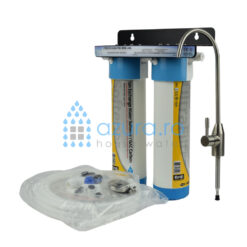 ULTRAPURE WATER FILTER ZADA PRO BMB LINE
1 × 1,325.00 lei
ULTRAPURE WATER FILTER ZADA PRO BMB LINE
1 × 1,325.00 lei
Promotie!
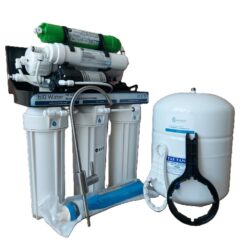
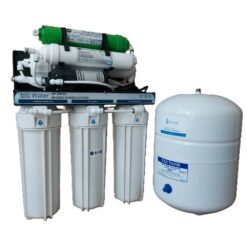
Stoc epuizat
Prețul inițial a fost: 1,730.00 lei.1,530.00 leiPrețul curent este: 1,530.00 lei. VAT included
Promotie!
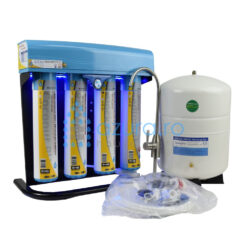
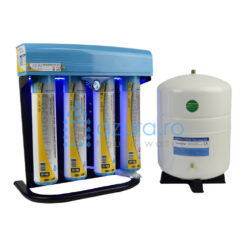
Prețul inițial a fost: 3,560.00 lei.3,370.00 leiPrețul curent este: 3,370.00 lei. VAT included
Promotie!
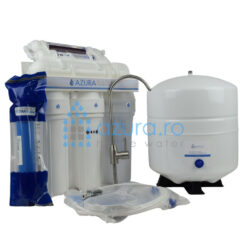
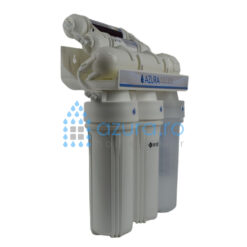
Prețul inițial a fost: 1,650.00 lei.1,250.00 leiPrețul curent este: 1,250.00 lei. VAT included
Promotie!


Prețul inițial a fost: 4,575.00 lei.4,170.00 leiPrețul curent este: 4,170.00 lei. VAT included
How does a reverse osmosis filter work?
Through the process of osmosis, the aim is to balance the concentration levels between two liquids separated by a semipermeable membrane (TFC-Thin-Film Composite). Thus, by applying pressure, the liquid moves from the area with a lower concentration level to the area with a higher concentration level. Therefore, the process of reverse osmosis aims to reverse this procedure. By applying pressure to the area where the liquid with a higher concentration is located, the aim is to move the liquid towards the area where the liquid with a lower concentration is.
Kitchen water filters Reverse osmosis involves a water purification process to remove up to 99.7% of impurities, resulting in pure water, free of bacteria and viruses. However, reverse osmosis water filters only work if the water complies with certain parameters and is not bacteriologically infested.
Reverse osmosis water filters remove a wide range of substances, including: * **Dissolved salts and minerals:** Such as sodium, calcium, magnesium, potassium, chloride, sulfate, and nitrate. * **Heavy metals:** Including lead, mercury, arsenic, chromium, cadmium, and copper. * **Microorganisms:** Bacteria, viruses, cysts, and protozoa. * **Organic compounds:** Pesticides, herbicides, industrial solvents, and other dissolved organic impurities. * **Other contaminants:** Such as fluoride, chlorine (though a carbon pre-filter is usually best for this), and sediment particles too small for other filters.
TFC membrane pores have a size of 0.0001 microns or 0.1 nanometers, allowing water molecules to pass through while retaining other substances such as aluminum, chlorine, arsenic, asbestos, benzene, nickel, mercury, copper, fluorine, ammonium, etc.
What type of water do you get when using a reverse osmosis filter?
The Azura Find reverse osmosis filters suitable for both drinking water and well water, with advanced technological systems. You can obtain pure water with minerals (calcium, magnesium, sodium, potassium, etc.), alkaline water, hydrogenated water, and antioxidant water, with strong healing properties.
Pay attention to the minimum water pressure for reverse osmosis purifiers!
For proper functioning, a reverse osmosis purifier requires a minimum of 2.5 bar pressure. If you do not have this pressure, the purifier will not function correctly or will not function at all. In this case, we recommend purchasing only a reverse osmosis purifier with a pressure pump. In our offer, you will find both reverse osmosis without a pressure pump and reverse osmosis filters with a pressure pump. This information is mentioned in the product descriptions.
What happens if I don't know the minimum water pressure?
In this case, we recommend that you choose a reverse osmosis purifier equipped with a pressure pump from the beginning. Adding a pressure pump later is a difficult procedure because additional parts for automation are needed, and you will probably need a technician. We suggest you avoid this.
Would you like to choose the right reverse osmosis water filter for your water source? Ask us and we will come up with the most suitable recommendation!
 English
  Romanian
  Spanish