
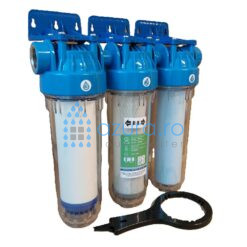
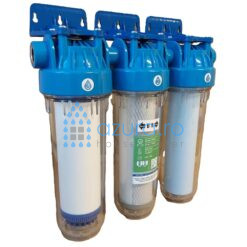
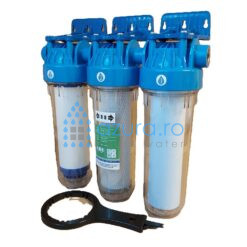
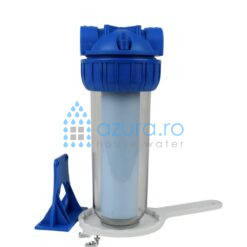
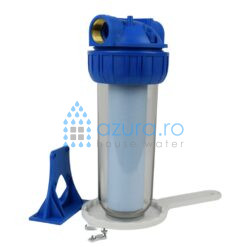
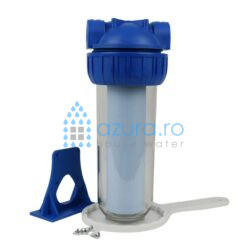
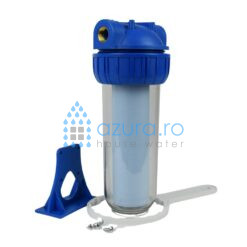
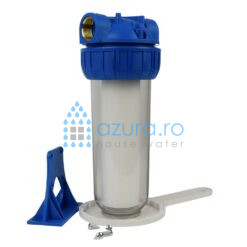
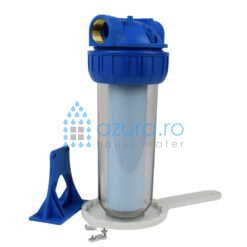
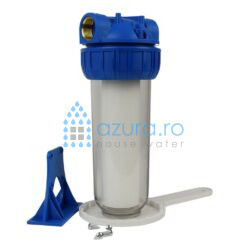
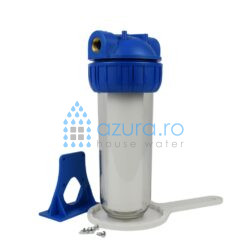
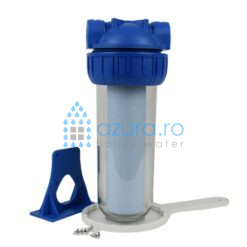
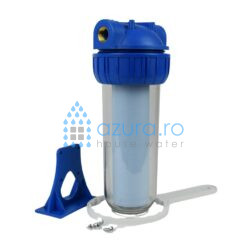
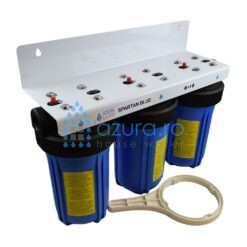
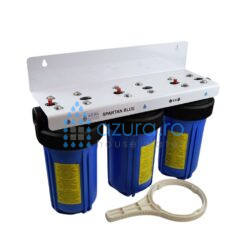
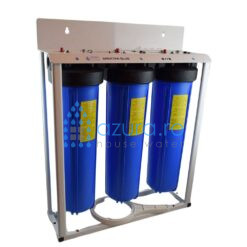
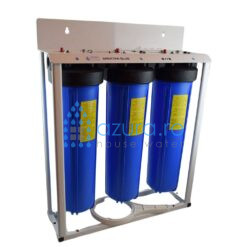
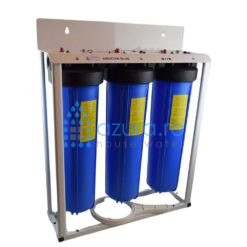
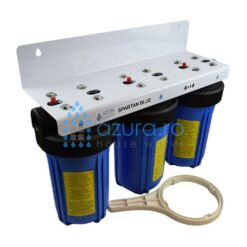
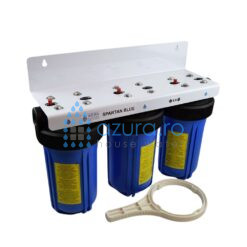
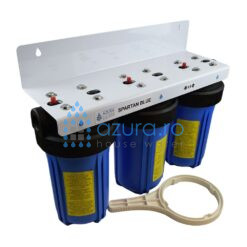
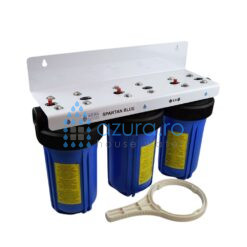
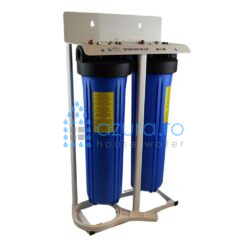
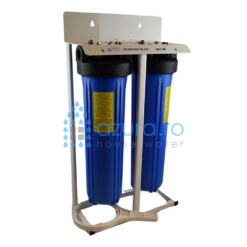
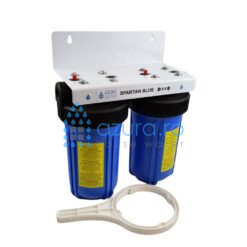
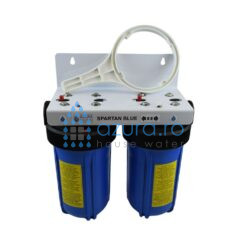
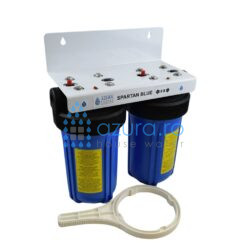
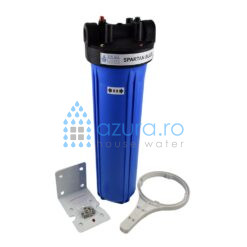
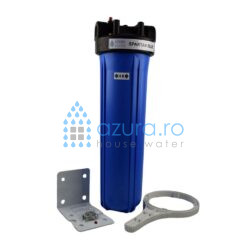
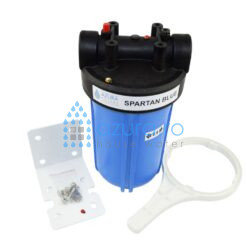
High-efficiency water filters – these filters capture a larger and finer amount of sediment.
To effectively filter water, it is necessary to use a polypropylene cartridge filter or a string-wound filter. Filtering water below 20 microns makes washable filters Sita or with discs, to be useless. There are filters with a 20 micron sieve but due to the fact that the sieve mesh is too small, it clogs very quickly and creates discomfort for the user, who is often forced to clean the filter cartridge. At the same time, a filter cartridge with a sieve at 20 or less than 20 microns, due to rapid clogging, will cause the water pressure and flow rate to drop. Very often it is necessary to use a fine filter (below 20 microns) in a house or at high flow rates. In this case, it is recommended to use filter cartridges made of polypropylene or wrapped thread, but with a high filtration capacity (large surface area). You can see in this section the 10" and 20" Spartan Blue filters. These filters are suitable for whole house water filtration. The filtration fineness is recommended to be at 5 microns for residential homes, but there are exceptions where the filtration should be even finer, for example 1 micron. Because of the large filtration surface, these filters will not block the water flow and water pressure too quickly. Filter cartridges are changed when the pressure drops to around 0.5 - 0.8 bar. When the pressure drops about 0.5 bar, the filter cartridge needs to be changed. Another indication that a filter needs to be changed is a drop in pressure in the shower or sink. This is quite easily noticed by the user.
Efficient filtering, in filter stages
The method used for better efficiency is step-by-step sediment filtration, from a coarser filtration grade to a finer and finer grade.
If the water turbidity is high (this parameter is found in almost all water analyses), for example, over 2 NTU, efficient filtration should begin with a coarse filter (50–130 microns), followed by a filter with a filtration grade of 20 microns, followed by a filter with a filtration grade of 5 microns, followed by a filter with a filtration grade of 1 micron. This is only an example that can be successfully applied, but this filtration scheme is not always absolutely mandatory.
When do we choose certain filtration grades for high efficiency and cost optimization?
For a house, we will most often choose a Spartan Blue 20″ filter with a filtration rating of 5 microns.
If there is very fine sand in the water that comes from drilling, or the water from the public network is yellowish/reddish, then a filter with a filtration grade of 1 micron is suitable.
There are cases where a 20-micron filter rating is sufficient, and other times when we need a 1-micron filter rating.
What sediment are we referring to that can be removed by filtration?
Sediment is composed of suspended particles, meaning particles that can be filtered, even if they are not always visible to the naked eye. Whether we are talking about sand, silt, or rust, all of these fall under the term „sediment.”.
We are here to help you make the right choice!
 English
  Romanian
  Spanish