

Arsenic is the same chemical substance, namely As.
On the internet, we will find information about both *arsen* and *arsenic*, but in fact, it's about the same chemical formula.
The presence of arsenic in nature in principal natural deposits in the Earth's crust.
Arsenic enters the Earth's crust either through corrosion, or through petroleum production, semiconductor production, or due to its use as a feed additive and herbicide.
Arsen is usually found in high levels in groundwater and in lower levels in surface water (i.e., lakes or rivers).
Arsenic is poisonous to humans, and ingesting 1000 milligrams of arsenic means severe poisoning. The effects of arsenic poisoning when small amounts are ingested appear very slowly and include skin lesions or circulatory system problems, and the risk of cancer increases.
Testing for arsenic is recommended because arsenic-contaminated water is colorless and odorless. Water with arsenic looks the same as water without arsenic.
The maximum limit established by Law “Probable Water Quality” 311/2004 is 10 μg/l in water.
Arsenic filters
Arsenic is difficult to remove from water. However, with the right filters, the results can be impressive. There are primarily three types of arsenic filtration systems:
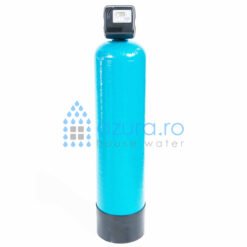
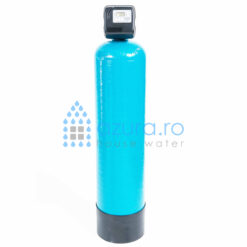
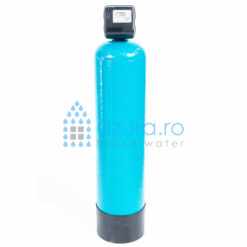
- Whole-house filters that are installed on the main cold water pipe. This filter is automatic and, depending on the daily volume of water consumed, requires automatic backwashing of the filtering media approximately every 2-3 days. It does not require regeneration like water softeners, but it does need backwashing and loosening of the filtering media. Therefore, it requires connection to a drain (like a washing machine).
This type of filter is the most suitable because it provides arsenic-free water to all household consumers, including bathing water. Filtration is done by the adsorption method, and the filter medium can function successfully for 3-6 years (this depends on the amount of arsenic in the water and the volume of water consumed).
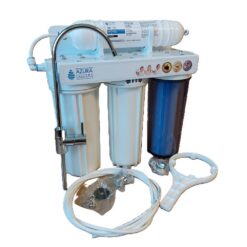
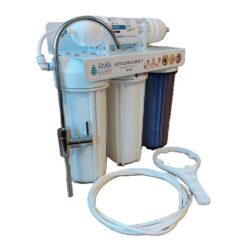
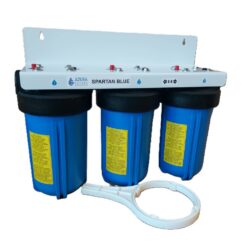
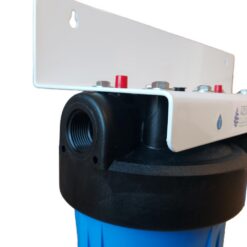
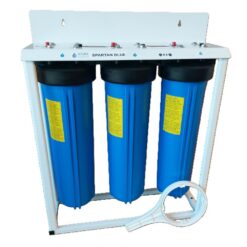
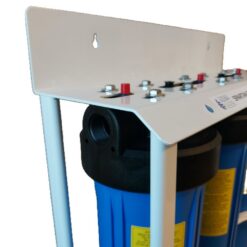
- Cartridge filters that are used up and replaced. Such filters exist for the whole house, meaning they are installed on the main water line of the house, or filters that are installed under the sink, for a single point of consumption, meaning for one faucet. They have lower filtration efficiency than automatic filters. In addition, there are filter cartridges that need to be replaced regularly. These filters are used when the user wants lower purchase costs or when there is no technical space equipped with a drain. These filters do not need a drain because they are not automatic and do not self-wash.
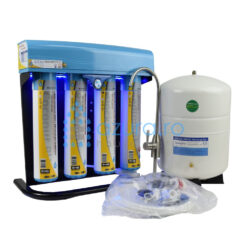
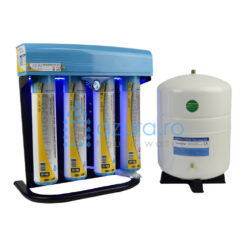
- The third type of filter for removing arsenic from water is the system with reverse osmosis. The most common use for a reverse osmosis system is in the kitchen, for drinking water, preparing tea and coffee, and cooking. Of course, there are large reverse osmosis systemsfor the whole house, but these don't make sense due to the initial and subsequent operating costs.
Would you like consultation for arsenic filtration? Contact us now: Contact
 English
  Romanian
  Spanish